




 Stadium Guides
Signal Iduna Park Guide: The Yellow Wall and Matchday Tips
German football returns later than usual this year. Because of the 2026 World Cup, the Bundesliga season begins a week behind its normal slot, with the opening matchday spread across 28–30 August 2026. For anyone planning a first trip to Dortmund, the late start is useful: it leaves time to prepare properly for one of the loudest stadiums in Europe.
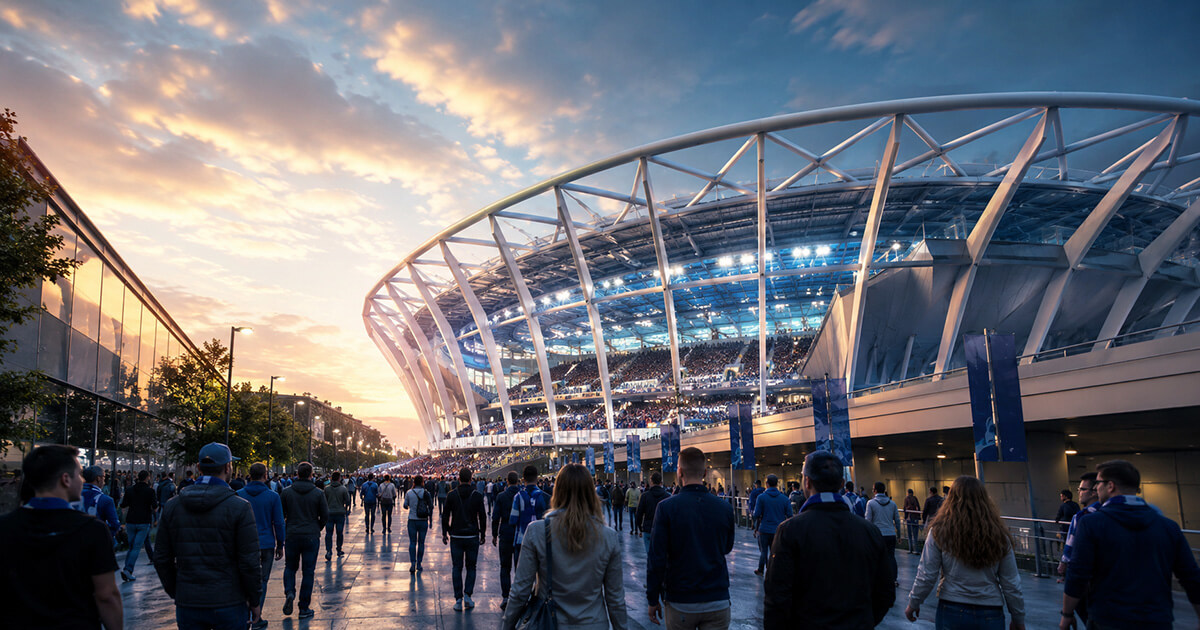
holds 81,365 people for league matches, which makes it the largest football stadium in Germany. Most visitors come for one particular part of it.
The standing terrace behind the goal
The Südtribüne — the south stand, widely known as the Yellow Wall — is a single standing terrace with room for 24,454 supporters. It is the largest terrace of its kind in European football, and it is the main reason the ground has the reputation it does. Standing areas were removed from most large stadiums in England and Spain decades ago. Germany kept them, and Dortmund built the biggest one.
Standing changes the experience in practical ways. You are allocated a section rather than a specific place, so arriving early matters if you want a particular spot. The terrace is steep and densely packed, the singing continues for most of the ninety minutes, and the crowd moves as one when a goal is scored. It is not the right choice for young children, for anyone who needs to sit down, or for a visitor who wants a calm view of the tactics.
Standing or seated depends on the competition
Here is a detail that surprises many first-time visitors: the terrace only exists on domestic matchdays. Standing is not permitted in UEFA competitions or international fixtures, so the Südtribüne is converted into seats and the capacity drops to around 66,000.
The same stadium therefore offers two different experiences. A domestic fixture gives you the full terrace. A European night gives you a seat in the same location, a smaller crowd and a noticeably different feel. If the standing experience is what you came for, check the competition before you book — play domestic and European matches in the same building.
Getting there and getting back
The stadium sits roughly three kilometres south of Dortmund Hauptbahnhof, the main railway station. The U45 tram line connects the two directly and is the busiest route on matchdays, running every few minutes from about three hours before kick-off until well after the final whistle. The U46 line towards Westfalenhallen takes slightly longer but is usually less crowded, which makes it a sensible choice for the journey back. There is also a railway station named Dortmund Signal-Iduna-Park, served by regional S-Bahn lines.
Your match ticket may also be your travel ticket
Many tickets for home matches include public transport on the day of the match. Where it applies, the travel permission covers the state of North Rhine-Westphalia until the early hours of the following morning, which includes trains, trams and buses across a wide area. Check the wording on your own ticket rather than assuming, but for most visitors it removes the need to buy a separate fare. It also makes staying in a neighbouring city such as Essen or Bochum a realistic option when Dortmund hotels are full.
Practical rules inside the stadium
Paying for food and drink
The fixed kiosks inside the ground are cashless. You can pay by debit or credit card, by phone, or with the club's own prepaid stadium card, which you top up in advance. Vendors who move through the stands carrying drinks still accept cash. Bringing a card is the simplest approach.
Bags and security
Bags larger than roughly 30 × 21 × 15 centimetres are not allowed inside, and everyone passes a security check at the gate. Storage facilities are available near the ground for a small fee, but travelling light is easier. Glass containers, bottles, long flag poles and professional cameras are all refused at the entrance.
What you wear
Home and away support is separated strictly. Visiting-team colours are not permitted in the Südtribüne or the other home sections, and home colours are not permitted in the away section. If you are travelling as a neutral, a plain jacket is the safest choice.
Choosing your view
For atmosphere, the terrace is unmatched. For photographs of the Yellow Wall itself, book the opposite end or a long side, because you cannot see the terrace properly while standing inside it. Upper-tier seats along a long side give the best overall view of the pitch and the clearest sight of the full stand opposite.
A busy August in Dortmund
The stadium's schedule this month is unusual. On 22 August 2026 it hosts the Franz Beckenbauer Supercup, the German season's opening trophy match, . Dortmund host it as league runners-up, because Bayern won both domestic titles last season. The league campaign then opens at home a week later, . Both are evening kick-offs, which suits a short trip: arrive during the day, see the city, travel home the next morning.
One planning note that applies all season. German fixtures are not limited to Saturday and Sunday — television scheduling spreads them from Friday evening through to Monday, and exact kick-off times are usually confirmed only a few weeks in advance. Book flexible travel where you can, and confirm the date and time before committing to flights.
If Dortmund is on your list, take a look at what is coming up at , or browse the wider calendar to build a weekend around more than one match.