



 Venue Guides
San Siro at 100: A Guide to Milan's Great Stadium
One hundred years old this season
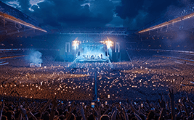
San Siro opened on 19 September 1926. The first match played there was a Milan derby, watched by around 35,000 people in what was then a private project by an AC Milan president. A century later the same ground holds just over 75,000 people, and in February 2026 it hosted the opening ceremony of the Winter Olympic Games. Very few buildings in sport carry that kind of continuous history.
The centenary falls mid-season, which makes this an unusually good year to finally go. Stadio San Siro (Giuseppe Meazza) took its official name in 1980, after a forward who played for both Milan clubs, but almost nobody uses it. Everyone says San Siro, after the district around it.
Two clubs, twice the football
Most famous grounds give a visitor one team to plan around. San Siro gives you two. Inter moved in as co-tenants in 1947 and the two clubs have shared the stadium ever since, with the league schedule alternating them: one club at home one week, the other the next. In most cities you build an entire trip around a single date. In Milan you can pick almost any week of the season and find top-flight football waiting.
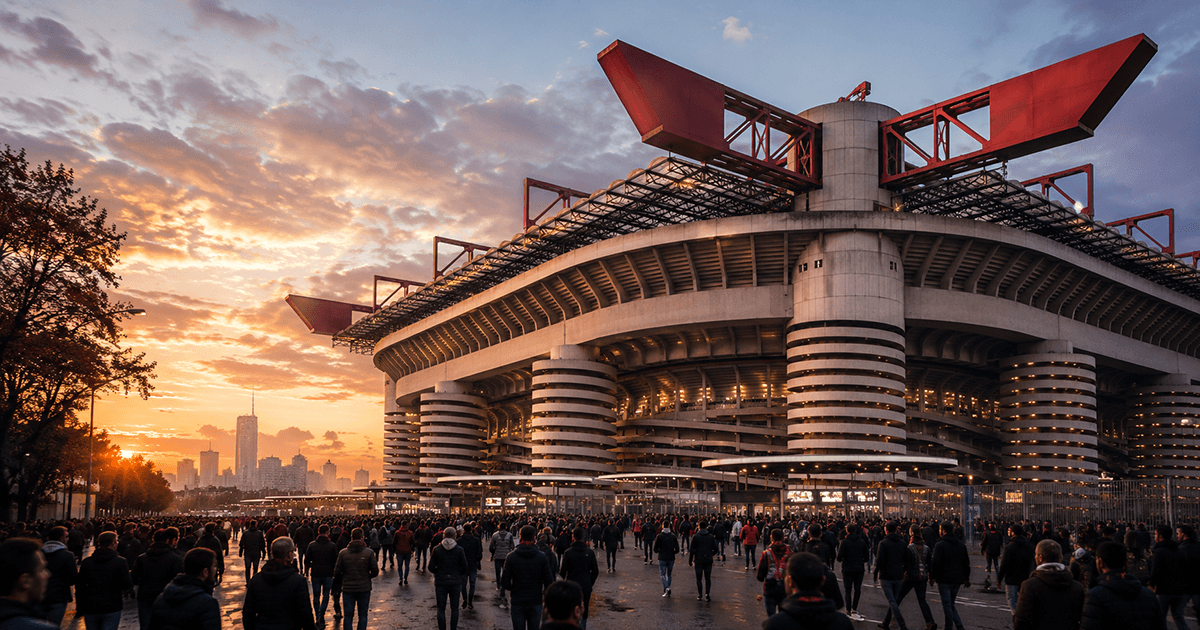
The building itself rewards attention. Three steep tiers, vast spiral concrete ramps at the corners that carry the crowd upwards, and a deep red steel roof frame added when the third tier went on ahead of the 1990 World Cup. Italians call it the Scala of football, a nod to the city's famous opera house. In Milan, that is high praise.
Getting there
San Siro sits about seven kilometres west of the Duomo, and the public transport is genuinely good.
Metro
The simplest route is line M5, the lilac line, to San Siro Stadio. The station was built for the stadium and leaves you a short walk from the turnstiles. If M5 is crowded on the way home, and it will be, the Lotto stop, served by both M5 and the red M1 line, is a slightly longer walk that often moves faster.
Tram and taxi
Tram 16 runs from the city centre out towards the stadium, passing close to the Duomo. It is the scenic option, so allow more time than the metro. Taxis and ride-hailing work well going out and poorly coming back, because the roads around the ground close to traffic. If you use a car, plan to walk ten or fifteen minutes away from the stadium before asking for a pickup.
Choosing where to sit
The three tiers behave very differently, and the ticket names follow them.
The three rings
The first tier, primo anello, is closest to the pitch and the best place to see detail and feel the noise around you, though low seats directly behind the goals give the weakest sightlines in the building. The second tier, secondo anello, is the sweet spot for most visitors: high enough to read the shape of the game, low enough to stay connected to the crowd, and a side position here is what we would book first. The third tier, terzo anello, is very high and very steep, with the best tactical view in Milan and the sharpest wind on a winter night. Excellent value, but not the choice if heights trouble you.
The ends
The two curves are where the organised support gathers: the Curva Nord for Inter, the Curva Sud for AC Milan. They are loud, they stand for the full ninety minutes, and they are a spectacle in themselves. Just know what you are buying. Anyone travelling with children, or wanting a calmer evening, should look at the sides instead.
A calendar that keeps moving
Two clubs sharing one stadium produces an unusually full schedule, and European nights add to it. One warning is worth repeating: do not assume matches are played on Saturday and Sunday. Italian Serie A kick-offs are spread across the week for television, and the autumn 2026 calendar at San Siro already includes a Friday evening fixture and a Monday evening one, alongside Sunday slots that range from mid-afternoon to nine o'clock at night. Confirm the time before booking a flight home for Sunday evening or Monday morning, and note that dates for matches more than a month or two ahead are often provisional and do move.
The city derby, the Derby della Madonnina, is the biggest night of the San Siro year and the hardest ticket in Milan. If that is your target, book early and expect the price to reflect demand.
When there is no match
The stadium runs guided and self-guided tours on most days, taking in the museum, the dressing rooms, the players' tunnel and the edge of the pitch. Allow an hour to ninety minutes. Because the museum covers both clubs, it is one of very few where two rival histories sit in the same rooms. Tours are usually reduced or suspended around match days, so check before travelling out.
What comes next
San Siro's future is settled in outline. The two clubs now control the stadium and the land around it, and the plan is for a new, smaller ground to be built alongside the current one later this decade, with San Siro coming down once the move is complete. Timelines on projects of this size shift, and nothing changes in the short term: both clubs will keep playing here for years yet. But a hundredth birthday and a closing chapter arriving together is a clear enough nudge.
Plan the weekend around it
Pick the fixture first, then build the trip. Milan gives you the cathedral, the Last Supper, the Navigli canals and some of the best eating in Europe, a short metro ride from your seat. Browse upcoming matches at San Siro, follow your club through the season, or see what else is on in the city while you are there.